
Free Employee Check-In App: Simplify Time Management Today
Ultimate Guide to Smart, Decorative & Customizable Clocks | PunchPro
Personal clocks are timekeeping devices designed for individual spaces and routines, blending utility with style to support punctuality, sleep health, and interior design. This guide explains what a personal clock is, how different classes like smart alarm clocks, unique wall clocks, and customizable desk clocks function, and why choosing the right device matters for daily life. Many readers struggle to match clock features to room use-cases—whether seeking a sunrise simulation alarm clock to improve mornings, a silent bedroom clock for deep sleepers, or a decorative clock for the living room—so this article maps clock types to routines, materials, and maintenance. You will learn clear definitions, evidence-backed explanations of sleep-related features, practical personalization workflows, and hands-on maintenance and troubleshooting steps. The guide includes comparison matrices (EAV-style), buying checklists, and multiple lists that highlight trade-offs between aesthetics and functionality to help you choose the ideal clock for each space.
What Are Personal Clocks and How Do They Enhance Your Daily Life?
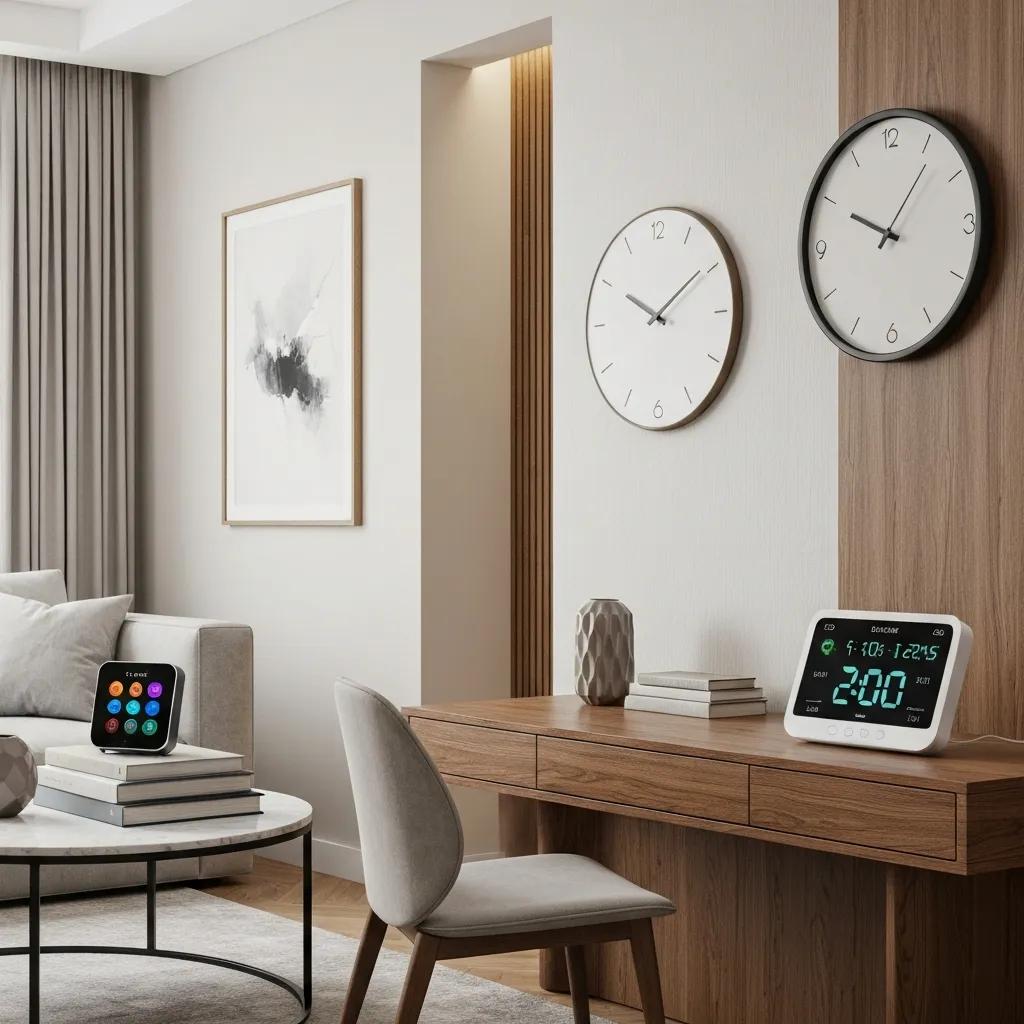
A personal clock is a timekeeping device tailored for individual use that combines timing accuracy with design, display, and interactive features to support routines and aesthetics. These devices improve daily life by reinforcing schedules, offering sleep-friendly wake cues, and serving as decor that anchors a room visually; the mechanism can be mechanical movement for longevity or digital systems for adaptive routines. Understanding types and benefits helps match a clock to goals like better sleep, clearer workspace organization, or a statement decor piece. Below we categorize major types and then explain how style and function are balanced in modern personal clocks.
What Types of Personal Clocks Are Available Today?
Personal clocks span multiple hyponyms—wall clocks, desk clocks, alarm clocks, smart clocks, analog clocks, digital clocks, sunrise alarm clocks, and travel clocks—each optimized for certain use-cases. Wall clocks typically serve as focal decor and benefit living areas, kitchens, or outdoor spaces, while desk clocks focus on legibility and ergonomics for workspaces; travel clocks prioritize compactness and battery life. Smart clocks integrate sleep tracking, Wi-Fi, and voice control for routine automation, and sunrise alarm clocks simulate dawn to ease waking. These classifications guide selection by showing which movement, display, or power source best fits a room and routine.
How Do Personal Clocks Combine Functionality and Style?
Design choices such as minimalist LED displays or vintage analog dials affect both usability and upkeep, since materials like wood, metal, and glass influence acoustics, weight, and cleaning requirements. Functional attributes—silent sweep movements, large numerals, atomic timekeeping, or temperature displays—preserve usability while finishes and color palettes ensure the clock complements room decor. Choosing a design involves trade-offs: a crystal mantel clock reads as luxurious but requires careful dusting, while a minimalist digital clock offers legibility and low maintenance but less tactile charm. Considering these trade-offs helps align design priorities with practical needs like legibility at a distance and silent operation for bedrooms.
How Do Smart Alarm Clocks Improve Sleep and Daily Routines?
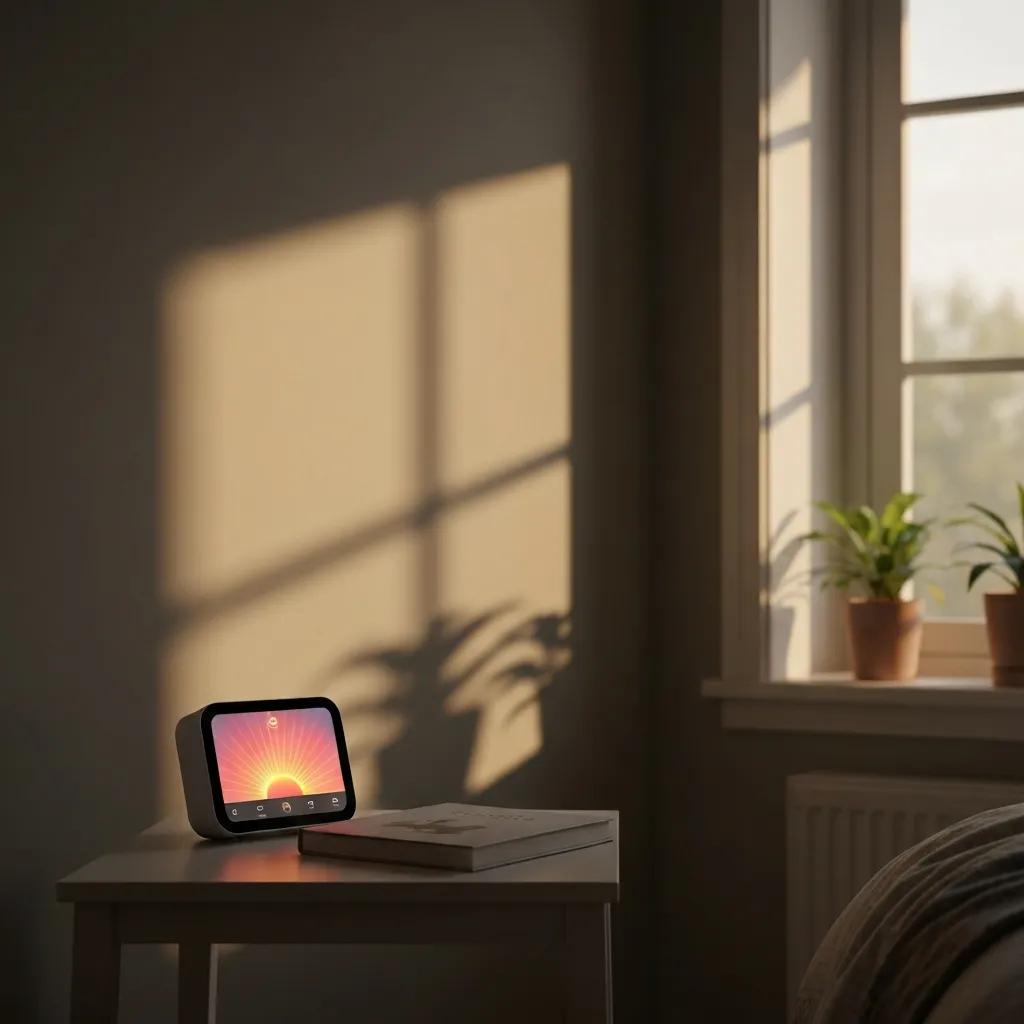
Smart alarm clocks improve sleep and routines by using sunrise simulation, sleep-tracking algorithms, and smart-home integrations to wake users during lighter sleep phases and orchestrate morning automations. Sunrise simulation gradually increases light intensity to mimic dawn, influencing circadian cues and reducing abrupt awakenings, while sleep tracking records metrics such as sleep stages, movement, and heart-rate proxies to suggest optimal wake windows. These clocks also connect to voice assistants and routines to trigger lights, thermostats, or playlists at wake time, creating cohesive morning sequences. Below we unpack the defining features and show a model-focused EAV comparison to clarify typical capabilities and trade-offs.
What Features Define Sunrise Simulation and Sleep Tracking Clocks?
Sunrise simulation works by modulating light over a programmed period—typically 15–45 minutes—ramping intensity and color temperature to cue melatonin suppression and cortisol rise for gentler wake-ups. Sleep-tracking features rely on sensors (motion, audio, or connected wearables) to estimate sleep stages and identify optimal wake windows; common tracked metrics include total sleep time, sleep efficiency, and movement-based restlessness indices. Accuracy varies by sensor type and algorithm, and recent studies indicate improved subjective morning alertness with gradual light-based wake methods. Understanding sensor limitations frames expectations: light helps circadian alignment while tracking provides actionable trends rather than medical-grade diagnostics.
Introductory comparison of common smart alarm features clarifies choices before detailed model comparisons.
This table highlights typical specifications rather than specific brands, showing what attributes to compare when selecting a smart alarm clock. Understanding these typical ranges helps buyers match features to sleep goals and home ecosystems.
How Do Smart Clocks Integrate with Smart Home Systems?
Smart clocks integrate via Wi-Fi, Bluetooth, or ecosystem-specific APIs to work with voice assistants and automation platforms, enabling routines like “wake” sequences that adjust lights, start a playlist, and raise thermostats. Common integrations include voice assistants, calendar syncing for weekday alarms, and IFTTT-style triggers to link clocks to other IoT devices; these connections let the clock act as a routine hub rather than a standalone alarm. Setup usually involves pairing an app, granting permissions, and configuring routines—steps that benefit from clear network credentials and firmware updates. The ability to coordinate devices means a smart clock can shift from merely signaling time to orchestrating an entire morning experience.
What Makes Unique Wall Clocks Stand Out as Decorative Home Accessories?
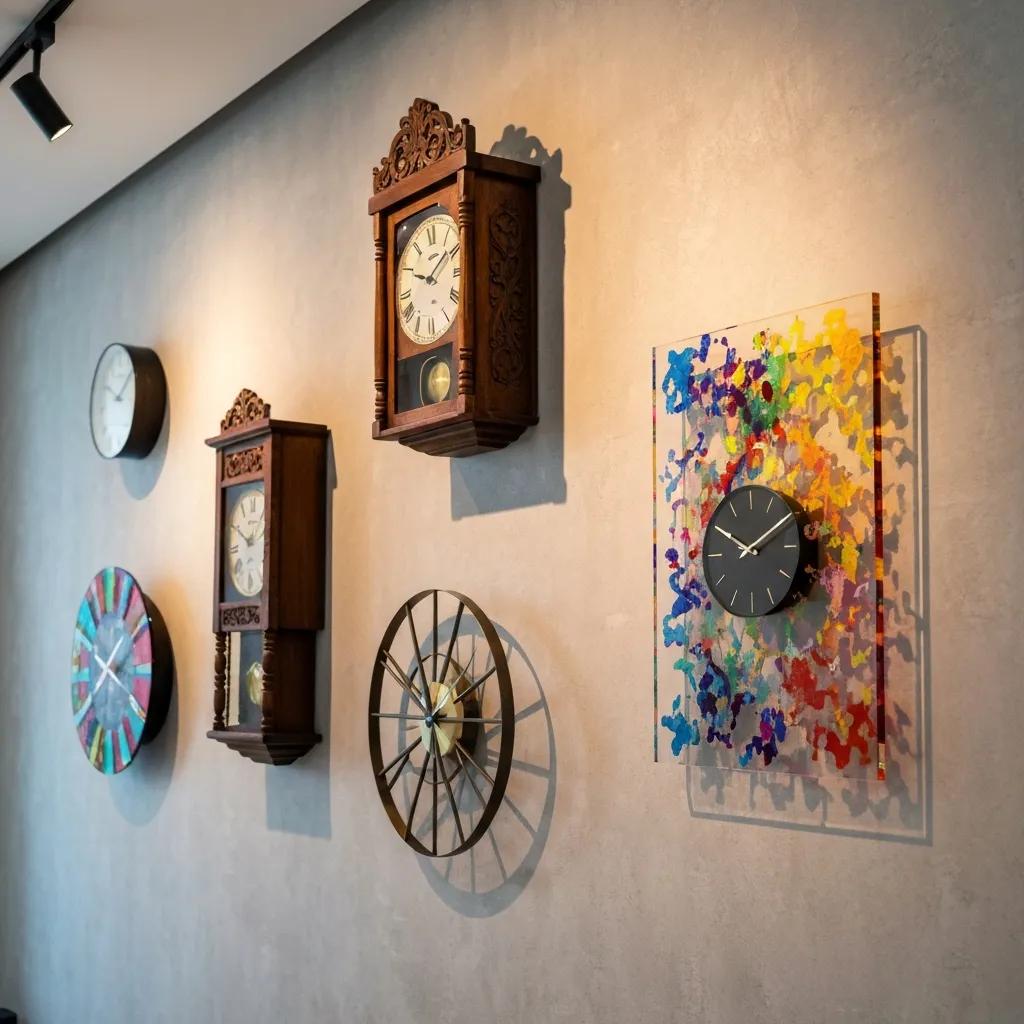
Unique wall clocks stand out by combining distinctive materials, proportional scale, and thoughtful finishing to act as both timekeepers and art pieces that define a room’s character. Signature design elements—oversized numerals, sculptural hands, layered materials, or mixed finishes—create visual impact while materials determine maintenance needs and longevity; for example, metal offers durability but may show fingerprints, while wood adds warmth but requires humidity-aware placement. Selecting a unique wall clock involves considering visual scale relative to wall space, concordance with room themes, and practical aspects like silent movement and ease of cleaning. Below we list popular styles and map them to room suitability and care.
Which Styles and Materials Are Popular for Unique Wall Clocks?
Popular styles include modern minimalist designs with clean dials, vintage or retro pieces with patinaed finishes, modern farmhouse clocks with distressed wood, and industrial metal-framed clocks with bold numerals. Materials commonly used are wood, metal, glass, MDF, acrylic, and crystal, each offering pros and cons: wood for warmth but moisture sensitivity, metal for resilience but possible rust in high-humidity areas, and glass for clarity but fragility. Matching style to room—industrial for loft kitchens, farmhouse for casual living rooms, crystal for formal mantels—ensures cohesion while material choice dictates maintenance frequency. These considerations help narrow options based on both aesthetic and practical priorities.
This comparison shows how selecting a style also commits you to specific care routines and placement considerations to preserve both function and finish.
How Can Unique Wall Clocks Enhance Your Interior Design?
A wall clock can serve as a focal point, anchor a gallery wall, or balance scale in a room by aligning its diameter and finish with furniture dimensions and color palettes. Placement rules include hanging the clock at eye level for common areas, ensuring at least 6–12 inches clearance from surrounding frames, and choosing a size proportional to wall dimensions—larger clocks for open-plan living spaces, smaller ones for corridors. Color and finish pairing tips include matching metals across fixtures and using contrast to make the clock pop against a backdrop, while layered textures help integrate it with wall art and shelving. Thoughtful placement turns a clock into an intentional design element rather than a functional afterthought.
How to Choose and Personalize Customizable Desk Clocks for Every Occasion?
Choosing and personalizing desk clocks starts by defining the intended occasion—executive gift, corporate award, memorial keepsake, or casual home-office accent—and then matching size, display type, power source, and customization options to that use. Key decision factors include readability, personalization medium (engraving, photo inserts, digital display), and durability under frequent handling; these determine whether a clock should have a metal plaque, a printed photo surface, or a programmable LED message. Personalization workflows typically involve selecting material and layout, approving proofs, and factoring in lead times for engraving or photo printing. A focused checklist below helps buyers evaluate options quickly.
A brief checklist outlines the main selection criteria before deeper exploration.
- Functionality: Choose analog or digital display based on legibility needs.
- Customization type: Select engraving, photo insertion, or programmable display for personalization.
- Material: Match wood, metal, crystal, or acrylic to the occasion and care requirements.
- Power source: Prefer battery for portability and plug-in for continuous display.
- Lead time and proofing: Confirm production and approval timelines before ordering.
This checklist streamlines decision-making by linking core requirements to personalization outcomes, ensuring the chosen clock suits the recipient and setting.
What Customization Options Are Available for Desk Clocks?
Customization options typically include engraving for names and dates, photo inserts or printed faces for personal imagery, color or finish selection for matching office decor, and programmable digital displays that rotate messages or logos. Each option has trade-offs: engraving is permanent and elegant but limited in visual complexity, photo inserts allow full-color imagery but may require protective coating, and programmable displays offer dynamic content but need power and occasional updates. Consider durability and legibility—engraved characters should be deep enough to remain readable over time, while printed surfaces benefit from UV-resistant coatings. Choosing the right customization aligns the sentimental value with expected use and display environment.
This table clarifies how each customization type aligns with occasion and care, guiding buyers toward sustainable personalization choices.
Which Materials and Designs Suit Personalized Desk Clocks Best?
Material choices—metal for executive desks, wood for warm home-office settings, acrylic for modern minimalism, and crystal for formal mantels—signal the occasion while affecting maintenance and longevity. Designs that feature clear contrast between numerals and background enhance legibility, and clocks with replaceable batteries or USB charging simplify everyday use. For kids’ rooms, durable plastics and playful graphics work well, while corporate gifts benefit from a refined finish and discreet personalization. Considering both aesthetics and functional durability ensures the personalized desk clock endures as a meaningful accessory.
What Are the Key Features and Benefits of Decorative Home Clocks?
Decorative home clocks integrate core functional features—silent operation, legible numerals, visible contrast, and optional lighting—with aesthetics to create pieces that serve both timekeeping and design roles. Benefits include providing a reliable time reference, reinforcing room rhythm, and contributing to mood and style through materials and form; hybrid products increasingly embed discreet smart features like temperature display or subtle connectivity. The 2024 trends emphasize sustainability, retro revivals, and tech-meets-decor hybrids that hide smart functions behind classic faces. Understanding these core features helps buyers prioritize which attributes to preserve when selecting a decorative clock.
How Do Decorative Clocks Combine Functionality with Aesthetic Appeal?
Design choices that preserve legibility—large numerals, high-contrast faces, and anti-glare glass—ensure a clock remains useful while offering aesthetic variety through hands, frame, and finish. Functional features that should not be sacrificed include silent sweep movements for bedrooms, reliable power sources for uninterrupted timekeeping, and clear mounting hardware for safety; these maintain utility even when the clock acts primarily as decor. Examples include a farmhouse wooden clock with a silent quartz movement or a minimalist LED clock with warm finish options. Selecting decorative clocks that prioritize these elements balances aesthetic goals with daily usability.
- Silent operation: Essential for bedrooms and quiet spaces.
- Legible display: Large numerals and contrast aid readability.
- Durable materials: Choose finishes appropriate for expected wear.
This list underscores that aesthetic choices must coexist with functional necessities to deliver lasting value.
What Are the Latest Trends and Innovations in Decorative Clocks for 2024?
Current trends include sustainable materials and reclaimed-wood designs, a vintage and retro revival of mid-century styles, and subtle integration of smart features—such as hidden sleep-tracking sensors or discreet LED indicators—into otherwise classic faces. Designers increasingly fuse handcrafted elements with modern movements, creating clocks that meet eco-conscious preferences while offering contemporary reliability. Market momentum in 2024 favors hybrid pieces that conceal smart capabilities to preserve aesthetics, appealing to buyers who want connectivity without overt tech presence. These trends suggest buyers can seek clocks that support both lifestyle and environmental values.
How to Maintain and Care for Your Personal Clock to Ensure Longevity?
Maintaining a personal clock involves routine physical care—dusting, gentle cleaning, battery replacement—and, for smart models, regular software and network upkeep including firmware and app updates. A simple maintenance cadence is monthly dusting, quarterly battery checks, and annual calibration or movement servicing for mechanical units; smart clocks additionally benefit from checking Wi-Fi stability and applying firmware updates when available. Combining physical and digital maintenance extends lifespan and preserves accuracy, and understanding common issues helps prioritize troubleshooting steps. Below are best-practice routines and a troubleshooting checklist to resolve typical problems.
What Are Best Practices for Maintaining Smart and Traditional Clocks?
For traditional clocks, clean the face and hands gently, replace batteries before they leak, and service mechanical movements periodically to lubricate and calibrate components; this preserves accuracy and finish. For smart clocks, maintain secure network credentials, update firmware and companion apps, and periodically reboot devices to refresh connections; backing up settings where possible preserves personalized routines. Environmental care—avoiding direct sunlight, humidity extremes, and magnets—protects movements and finishes. Regular maintenance prevents common issues and ensures both analog and digital components continue to perform reliably.
- Monthly: Dust surfaces and check battery compartment for corrosion.
- Quarterly: Replace alkaline batteries and verify app/firmware updates for smart clocks.
- Annually: Calibrate mechanical movements or seek professional servicing as needed.
These intervals offer a practical schedule that balances hands-on care with minimal disruption to daily use.
How Can You Troubleshoot Common Issues with Personal Clocks?
Troubleshooting follows a problem → probable cause → stepwise fix pattern: if a clock stops, check batteries and contact points first; if timekeeping drifts, consider movement calibration or battery voltage; if a smart clock loses connectivity, reboot the router and verify credentials. For display errors, inspect power sources and screen brightness settings, and for inaccurate sleep-tracking data, review sensor placement and wearable pairing. Escalate to professional repair when mechanical damage is evident or when firmware corruption persists after resets. Knowing when to perform simple fixes versus seeking service saves time and often preserves the original device.
This table helps readers quickly identify probable causes and take appropriate first steps before pursuing repairs.