
Discover the Best Workforce Scheduling App for Your Needs

Optimize Employee Scheduling & Shift Planning with PunchPro
Workforce scheduling is the process of assigning the right people, with the right skills, at the right time to meet operational demand while controlling labor cost, ensuring compliance, and supporting employee work-life balance. This guide explains how workforce scheduling intersects with workforce management, what features to prioritize in workforce scheduling software, tactical optimization strategies that reduce labor costs and mitigate compliance risk, and actionable best practices for 2025. Readers will learn how forecasting, rules engines, and mobile self-service reshape shift planning, plus industry-specific approaches for retail, healthcare, and hospitality. Practical checklists, EAV-style comparison tables, and stepwise tactics will help managers evaluate scheduling automation, predictive analytics, and employee engagement mechanics. Throughout, we use terms like workforce scheduling software, shift planning, scheduling automation, and predictive analytics for staffing to connect concepts to tools and measurable outcomes.
What is Workforce Scheduling and Why is it Essential?
Workforce scheduling organizes shifts, availability, skills, and constraints into operational rosters that meet demand while minimizing cost and risk. It works by matching demand signals—sales forecasts, patient volumes, reservation patterns—to employee attributes like certifications, preferred availability, and labor rules, producing schedules that balance coverage and cost. Effective scheduling delivers measurable results: fewer missed shifts, lower overtime, and better employee retention, which together preserve service levels and legal compliance. The next sections define core components and enumerate the principal benefits that make scheduling essential for modern organizations.
Defining Workforce Scheduling and Employee Shift Management
Workforce scheduling is a focused subset of workforce management that specifically handles shift creation, assignment, and adjustment within defined constraints. Core components include demand inputs (historical transactions, seasonality), employee profiles (availability, skills, certifications), scheduling constraints (labor laws, contract rules), and supporting modules like time & attendance and payroll integration. These elements form a practical roster management workflow where shift templates and availability calendars act as meronyms—parts of the broader scheduling system that enable automation. Understanding these components clarifies why scheduling differs from broader HR functions and sets up how forecasting and rules engines deliver operational value.
Key Benefits of Effective Workforce Scheduling
Effective workforce scheduling produces clear operational and financial gains that can be tracked via KPIs. It reduces labor waste by aligning staffing to demand, lowering overtime and shrinkage, and improving fill rates for open shifts. It also enhances compliance by codifying rest periods, predictive-notice windows, and break rules into a rules engine, reducing legal exposure. Finally, better scheduling improves employee engagement and work-life balance by honoring preferences and enabling fair shift distribution, which contributes to lower turnover and improved service consistency. These advantages lead naturally to the question of which software features actually enable such outcomes.
Which Features Should You Look for in Employee Scheduling Software?
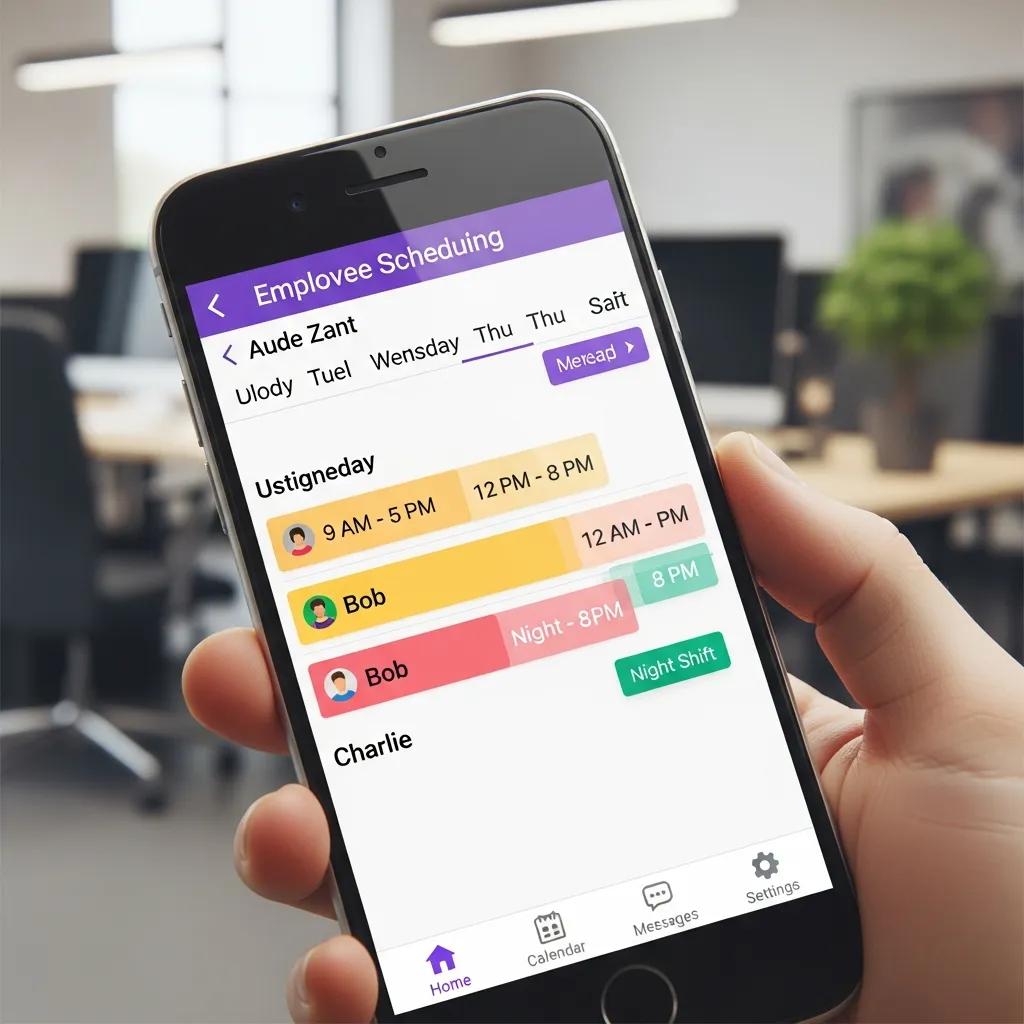
Workforce scheduling software must combine forecasting, rules enforcement, and employee-facing tools to deliver consistent staffing decisions and rapid schedule updates. The best solutions provide an integrated forecasting scheduler, a robust compliance rules engine, mobile employee scheduling capabilities, and integrations with HRIS, payroll, and time & attendance to close the operational loop. Next we present a concise checklist of top features and then an EAV table that links core features to the operational benefits and KPIs they deliver.
This checklist highlights the features most directly tied to performance and adoption:
- AI Forecasting and Predictive Analytics: Predicts demand and reduces open shifts through data-driven schedules.
- Rules Engine for Compliance: Enforces labor laws, rest windows, and contract rules automatically.
- Mobile Self-Service and Shift Exchange: Enables employees to pick up and swap shifts while preserving eligibility and approvals.
These features form the baseline for providers that aim to improve fill rate, reduce overtime, and increase employee satisfaction. The next element maps features to measurable business outcomes.
This feature-to-value mapping clarifies how investments in specific modules translate into KPIs managers track. Understanding AI and mobile workflows next explains how those capabilities operate in practice.
AI and Automation Capabilities in Scheduling Tools
AI and automation in scheduling use predictive analytics to forecast labor demand, optimization algorithms to assign shifts, and automation to execute repetitive tasks like publishing schedules or filling qualified open shifts. Predictive analytics aggregates data sources—sales, reservations, historical foot traffic—and produces a demand curve that a forecasting scheduler uses to recommend staffing levels. Optimization models then reconcile that demand with employee availability, skills, and rules to minimize cost metrics like overtime and unnecessary overstaffing. These technical mechanisms reduce manual work for managers and produce schedules that respond to changes more quickly, which sets up the need for accessible employee-facing features to capture real-time availability.
Mobile Access, Self-Service, and Shift Swapping Features
Mobile access and self-service capabilities let employees interact with schedules in real time, submitting availability, claiming open shifts, and initiating shift swaps with embedded eligibility checks. Typical mobile features include push notifications for new shifts, in-app swap approvals, availability calendars, and a shift exchange marketplace that respects seniority or skill constraints. These features improve uptake and reduce time-to-fill by enabling frontline staff to act instantly, while approval workflows ensure managers retain oversight. Combining mobile self-service with automation preserves schedule integrity and enhances engagement—critical for retention and for implementing the tactical strategies discussed next.
How Can Scheduling Optimization Strategies Reduce Labor Costs and Improve Compliance?

Scheduling optimization cuts labor expense by tightly aligning staffing to demand and reducing reactive overtime, while compliance is improved by encoding legal and contractual rules into scheduling workflows. Mechanisms include demand forecasting to avoid overstaffing, eligibility-based auto-assignment to ensure certified coverage, and rules engines to block illegal patterns before a schedule is published. This QA-style overview explains the primary levers managers use to achieve cost and compliance outcomes and then details forecasting and legal enforcement tactics.
The next table shows common optimization strategies, how they work, and their expected impact on cost and compliance KPIs.
This mapping clarifies how each strategy affects measurable outcomes and directs attention to forecasting practices and compliance enforcement next.
Forecasting Labor Demand and Managing Employee Availability
Forecasting begins with assembling data sources: point-of-sale transactions, reservations, patient census, seasonality, and event calendars. A practical forecasting routine creates a baseline demand model, applies adjustments (promotions, weather, events), and converts demand into required role-hours by skill and location. Once forecasted needs are defined, availability management captures employee constraints and preferences through availability calendars and time-off windows to create a compatibility matrix for auto-assignment. Incorporating real-time attendance and short-term demand signals enables continuous schedule tuning and reduces reliance on costly last-minute labor. These forecasting and availability practices naturally interface with compliance mechanisms to prevent rule violations when finalizing rosters.
Ensuring Compliance with Fair Workweek and Predictive Scheduling Laws
Compliance starts by codifying jurisdictional rules—predictive notice, rest periods, maximum hours—into a rules engine that evaluates candidate schedules at creation time. The rules engine flags conflicts, enforces minimum rest intervals, and captures predictive-notice windows so managers can provide required scheduling information on time. Automated alerts and audit logs both prevent violations and create documentation for audits or disputes. Operationalizing compliance this way reduces legal risk and employee friction, and it allows organizations to scale scheduling practices across locations without reintroducing manual compliance checks.
What Are the Best Practices for Workforce Scheduling in 2025?
Best practices in 2025 combine robust templates, continuous forecasting cycles, employee involvement, and explicit well-being safeguards to reduce burnout and support flexible work patterns. Organizations should use modular shift templates for routine coverage, run weekly forecasting reviews for short-term adjustments, and involve staff through preference-based scheduling and transparent shift allocation. These practices improve predictability for employees and operational responsiveness for managers. Below are prioritized best practices and a short, practical checklist managers can implement immediately.
- Use shift templates for repetitive coverage to speed schedule creation and maintain consistency.
- Run a rolling forecasting cadence every 7–14 days to incorporate latest demand signals.
- Collect and honor employee shift preferences to improve acceptance and retention.
- Embed rest-window and maximum-consecutive-shift rules to protect well-being.
Implementing Templates, Forecasting, and Employee Involvement
Templates reduce manual effort by encapsulating common shift patterns—weekday morning, weekend evening, holiday coverage—and they act as starting points for automated schedules. A recommended cadence is weekly demand forecasting with a 2–4 week planning horizon for predictable events and a daily adjustment loop for short-term changes. Employee involvement takes the form of preference capture, shift bidding, and transparent rules for priority in shift auctions, which increases fairness and acceptance. Rolling these elements together—templates, forecast cycles, and transparent participation—creates a scheduling rhythm that balances managerial efficiency and employee predictability, which also supports wellbeing measures discussed next.
Addressing Employee Well-being and Burnout Through Scheduling
Scheduling policies that limit consecutive night shifts, mandate minimum rest windows, and cap weekly hours directly reduce burnout and improve retention metrics. Practical mechanics include enforced maximum-consecutive-shift counters in the rules engine, guaranteed rest intervals between blocks, and voluntary preference programs for lighter or heavier schedules during peak life-event periods. Measuring outcomes—turnover, sick-call rates, and engagement scores—helps quantify the impact of wellbeing measures and iteratively refine policy thresholds. Integrating these controls into scheduling software ensures they are consistently applied across locations while giving managers the visibility needed to balance coverage and employee health.
How Does Workforce Scheduling Vary Across Industries Like Retail, Healthcare, and Hospitality?
Workforce scheduling adapts to industry-specific drivers such as demand volatility in retail, certification and continuity requirements in healthcare, and table-turn and event-peaking in hospitality. Each sector prioritizes different KPIs: fill rate and labor cost for retail, patient-to-staff ratios and certification coverage for healthcare, and table-turn and peak coverage for hospitality. The following comparative mapping outlines common challenges and targeted scheduling tactics that address them, followed by anonymized case examples demonstrating measurable improvements.
Industry-Specific Scheduling Challenges and Solutions
- Retail faces peak demand spikes, part-time coordination, and multiple store locations; solution tactics include micro-forecasting at store-level and flexible shift pools.
- Healthcare requires certified staff, continuity of care, and strict handover windows; solutions include skills-based assignments and mandated rest protections.
- Hospitality must manage reservation-driven surges and cross-trained staff; solutions emphasize dynamic role assignments and predictive staffing tied to booking data.
Case Studies Demonstrating Scheduling Success in Different Sectors
Anonymized examples illustrate quantifiable results from targeted scheduling changes: a retail chain that introduced weekly micro-forecasts and a shift-exchange marketplace cut overtime by nearly 18% while improving fill rate; a regional hospital that enforced certification checks in its scheduling engine reduced missed-coverage incidents and improved compliance documentation; a hospitality group implementing demand-linked staffing adjustments saw table-turn efficiency rise and peak-hour understaffing decline. These short case summaries show that combining forecasting, templates, and rules engines yields measurable improvements in cost and service, and they set the stage for the emerging trends shaping scheduling tools.
What Are the Emerging Trends and Future Outlook for Workforce Scheduling?
The near-term outlook for workforce scheduling centers on expanded use of AI and predictive analytics, deeper mobile-first employee experiences, and an increased emphasis on scheduling practices that support flexibility and wellbeing. AI will shift from descriptive reporting to prescriptive scheduling—recommending optimal rosters and continuously optimizing them as new data arrives. These trends have tactical implications for data needs, governance, and change management, and they signal how organizations should prioritize investments in scheduling automation and analytics.
The next list summarizes top trends for managers to monitor and adopt.
- AI-driven prescriptive scheduling: Systems that recommend and auto-assign optimized rosters.
- Predictive analytics for staffing: Real-time demand signals and scenario planning.
- Mobile-first engagement: Employee apps that enable shift auctions and preferences.
- Wellbeing-centric policies: Scheduling limits and fatigue mitigation embedded in software.
Adopting these trends requires both technical readiness and cultural change; the following subsections explain AI mechanics and flexible-work tactics.
The Role of AI, Predictive Analytics, and Automation in Scheduling
AI capabilities in scheduling include demand forecasting models, auto-assignment engines that respect eligibility constraints, and continuous optimization that reacts to attendance signals. These AI features typically improve fill rates, reduce overtime, and lower manual scheduling time by automating repetitive decisions and surfacing exceptions that require human judgment. Implementing AI requires clean data inputs—historical demand, attendance, and event calendars—and governance to validate model recommendations and avoid hidden bias. When combined with a rules engine and human-in-the-loop workflows, AI becomes a decision amplifier that drives measurable KPI improvements.
Flexible Work, Hybrid Models, and Employee Engagement Strategies
Flexible and hybrid work models require scheduling tools that manage partial remote blocks, shift bundling, and variable-location assignments while preserving coverage for core hours. Engagement strategies—preference collection, shift auctions, and transparent priority rules—help match organizational needs with employee life demands. Policies like guaranteed minimum hours, voluntary shift pools, and advanced notice for schedule changes enhance predictability and retention. Balancing flexibility and coverage involves defining service-level targets, modeling trade-offs in the scheduling system, and iteratively adjusting rules based on measured engagement and operational outcomes.